
YES Launch-Business Pitch
Updated: Apr 12
This month’s YES meeting was an insightful and truly useful one at that, especially for anyone serious about building a strong pitch and understanding what success actually looks like in business.
The event first began with Matthew speaking to the crowd about business pitching and key tips for the YES Launch. A major point consistently emphasized was to know the judging criteria, because understanding exactly what the judges are looking for can completely change how a group prepares. Chris also referenced his past two years of YES Launch experience and brought up his group’s example of “Hydrate,” (an edible water bottle) which gave context to what successful projects may come out as.


A major portion of the advice also consisted of preparation. One important tip was to begin by meeting up as a team to evaluate and “grade” the product honestly whilst eliminating preliminary errors. Looking into other competitors of your product was also emphasized, especially if the market is already saturated with the ideas people came up with. This helps determine whether the product is truly unique and whether it can realistically succeed. Another key aspect of preparation was meeting up to perform “mock presentations” before actual presentations occurred. This not only stressed proactivity, but fostered the idea of teamwork and getting familiar with your peers whilst also remaining as a key role in finalization of the product.
In addition to preparation, organization was another major focus. Teams need clearly defined roles and consistent dynamics so every member is aware of their purpose. This advice is valuable because judges will ask questions, and any uncertainty with answering those questions may lead to the fallibility of a product.


To truly set a project apart, the biggest advice was to make the product feel less theoretical and more viable. The goal, as stated by Matthew himself, is to make the judges think: “Wow, this really could actually exist.” Enforcing a sense of realism can make even a simple idea stand out.
In all, pointing out the judging criteria helped make YES aware of the factors that play into a truly good product-presentation. Focusing on novelty, feasibility and market potential, efficiency, completeness, and presentation, is necessary to succeed.
Following these useful tips and tricks, Charlie Tian, father of Matthew Tian and founder of GuruFocus, gave an incredibly inspiring presentation about risk, uncertainty, and success.

His story was unique because it represented how unpredictable success can be. Originally, Tian wanted to be a physicist and spent 11 years of his life studying science. Eventually coming to Texas A&M University because of financial struggles, he began a career in fiber optics, which he described as the AI of his time, and even had an astonishing 32 patents in just seven years.
However, after the “dot-com bubble burst and the post-9/11 layoffs”, he began questioning why his life was controlled by others. He asked himself the question: “Why do I have to work for them?” That uncertainty pushed him to start his own business, specifically, a website. Inspired by Warren Buffett, he created GuruFocus, a website based on stock market data and research. These humble beginnings were a slow start, with only three dollars being made on the first day.
Even then, it showed him that success in this business was possible. He realized it wasn’t just the traffic that would make him money, but the ads. With the addition of advertisements, he also became aware that he could implement subscriptions. These new additions amounted to 40,000 dollars in just the first year. Soon enough, it grew into a platform with 1.5 million users across 152 countries.
His biggest takeaway was simple: desire and passion matter. If you truly love what you do, it becomes much easier to keep going through setbacks. With inspiration taken from the creator of Nike, he gave us one final remark: “Just do it.”


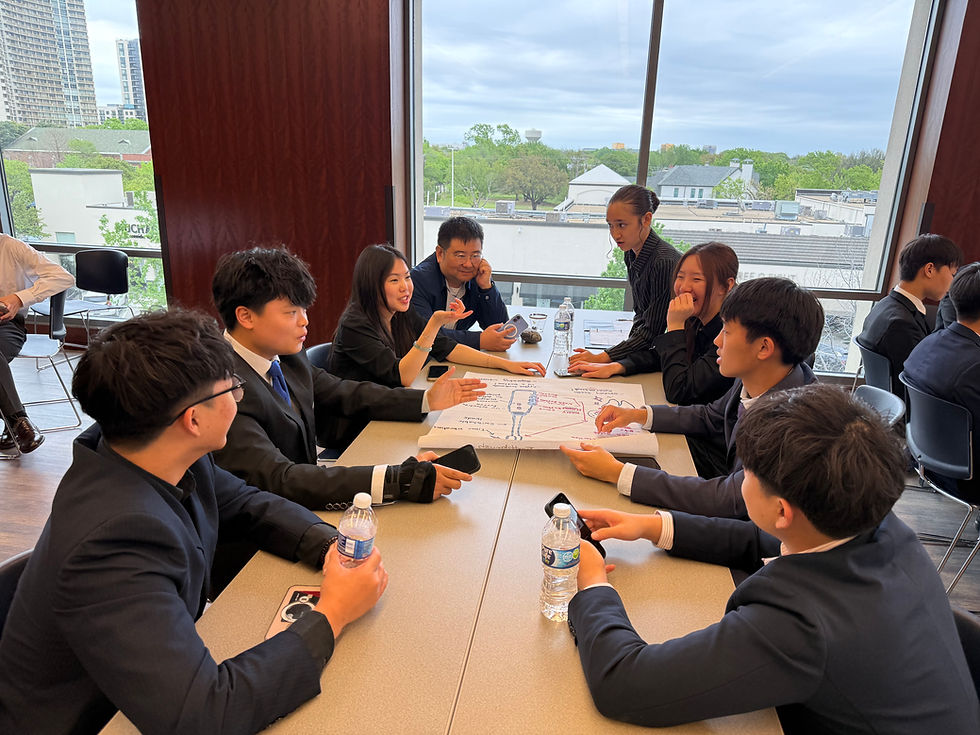
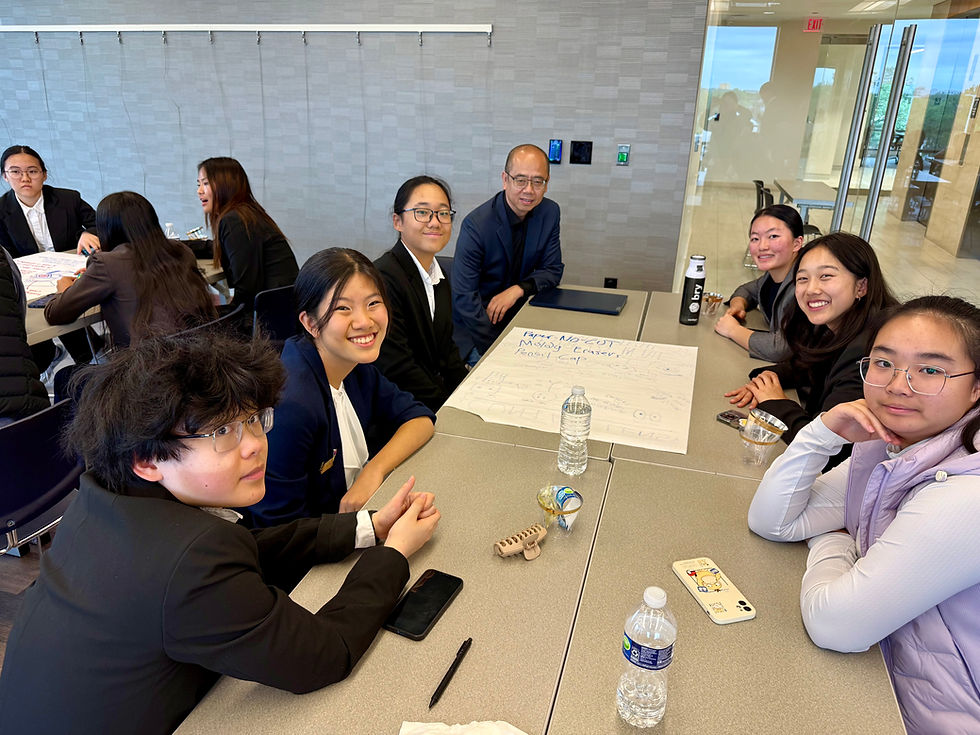
After this enthralling presentation, the event transitioned to mini product pitches. Thank our adult mentors: Jie Song, Ted Su, Frank Yang, Jack Sun, Jason Zhou, and Peter Yan. YES split into 6 groups with each mentor's onsite instructions, with a magic wheel of different daily use products as the basis for our activity. As the wheel spun, whatever it selected would be what a certain group would have to improvise and present. Products ranged from high-tech electronic toothbrushes to AI-powered self-sustaining refrigerators.

This activity was especially engaging because it challenged each group to think quickly under the mere 5 minute timeframe. In addition, the application of the same aforementioned principles of novelty, feasibility, and presentation were reinforced.
More than anything, it reinforced how strong ideas are often shaped not only by creativity, but by how effectively they are communicated. See you at EOY scheduled on May 17th 5-8 for business competition!


Comments